Membership Site Examples for Music Creators in 2026
Summary
These membership site examples work for electronic music producers, Twitch streamers, and live performers in 2026. Patreon for community and tier-based perks. Bandcamp subscriptions for catalog-heavy release schedules. Fourthwall for streaming-native creators at 0% platform fee. Sample pack memberships for producers with a deep back catalog. Ko-fi for sub-1000 audiences starting out. Skip Kajabi unless you are building structured music education.
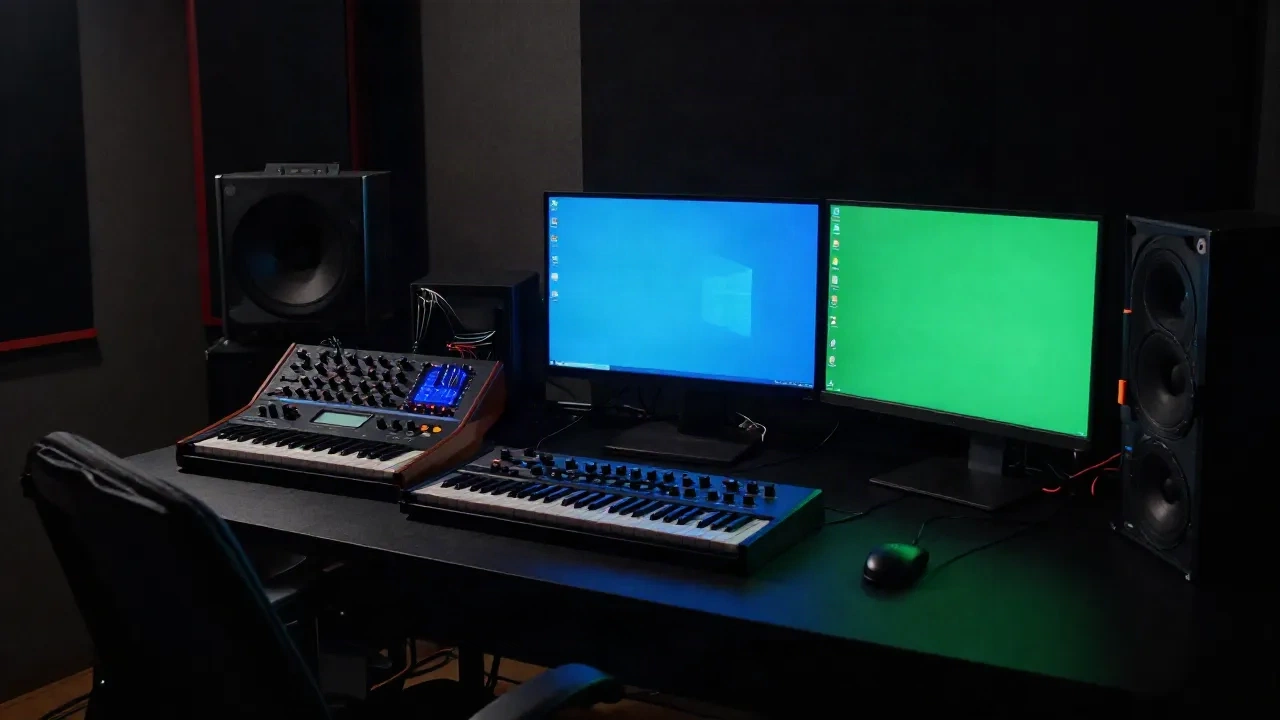
You've been streaming three nights a week for six months. Regular viewers. Good energy on the decks. Zero recurring income beyond Twitch bits that don't add up to rent. Membership sites fix that math. Here are real membership site examples built by producers and streamers, with the platforms and formats that hold up under live use.
Not all membership models work for music creators. Most comparison posts push enterprise course platforms built for life coaches and business consultants. That's not your use case. Your product is your craft, your sessions, your sound, your back catalog.
What separates a music membership from a tip jar
A tip jar is one-time. A membership is recurring. The difference in business terms is simple. The execution gap is wider.
A membership works when you can answer one question: what do members get every month that they can't get anywhere else? For music creators, that answer lands in three categories. Exclusive audio: unreleased tracks, stems, sample packs. Community access: production feedback, Q&A, behind-the-scenes set prep. Education: workflow recordings, live session breakdowns, technique tutorials.
The membership site examples that fail are the ones where "support my work" is the only value proposition. A payment with no deliverable attached has a retention rate close to zero.
Two cases where it works, one where it doesn't. Works: stem pack drops on Patreon, live production breakdowns locked to subscribers. Doesn't work: a Discord access tier with no actual content behind the paywall.
Patreon: the default, and when it earns its cut
Patreon is the most recognized membership site platform among music fans. That recognition matters. If your audience already supports other creators there, the friction to add you is lower than asking them to sign up somewhere new.
The tier structure that holds up for producers: $5/month for early listening access and exclusive playlist drops, $10/month for a monthly stem or sample pack, $25/month for live production breakdown sessions or member-only Q&A calls. Keep it to three tiers. More than that and decision paralysis kills conversion rates.
Patreon takes 8-12% depending on your plan. At $2,000/month gross, that's $160-240 in platform fees before payment processing. Price your tiers with that math built in.
The working example at small scale: producers with 300 to 500 dedicated Twitch viewers who convert 2-3% to a $10/month tier are generating $60-150/month recurring. That's not rent. But it's your Ableton license, your Splice subscription, and a signal that the model works before you invest more in it.
Patreon also has a browse feature that helps new fans discover your page. That matters for growth, not just retention.
Bandcamp subscriptions: built for the catalog release cycle
Bandcamp's subscription feature is underused by producers who keep releasing standalone albums. It works differently from Patreon. Instead of tiers with perks, you offer a single monthly or annual subscription that unlocks your full catalog plus everything you release during the active subscription.
This model works if you release consistently. Beatmakers with an EP every two months, ambient producers with a steady track output, labels running four to six releases per year. If your cadence is one album every 12 months, subscriber retention will be rough, because there is nothing to return for between releases.
Bandcamp takes 15% on subscription revenue for the first $5,000, dropping to 10% after. Compared to Patreon's per-tier structure, this is often simpler for catalog-heavy artists who don't want to manage multiple content deliverables.
There's a positioning signal built into the format. Offering a catalog subscription says your music is worth returning to over time, not just sampling once on a streaming platform. That positioning reads differently to serious listeners in the electronic music space, where catalog depth is a marker of credibility.
Fourthwall: the Twitch-native membership option worth testing
Fourthwall launched as a merch platform for streamers and has since added membership features. If your primary audience lives on Twitch or YouTube, this is where signup friction is lowest. It integrates directly into your Twitch channel panel, and viewers already in subscription mode mentally make the transition faster.
The membership format mirrors Patreon: tiers, exclusive content drops, member-only posts and video. The key difference is the 0% platform fee on memberships on their free plan. Fourthwall makes its margin on merch and optional premium tools. For a DJ who wants recurring income without giving up 10% to another platform, this is worth running as a 90-day test alongside your existing setup.
The caveat is real though. Fourthwall has minimal fan discovery features. Patreon has a browse function where music fans explore new creators. Fourthwall assumes your audience already knows you exist. It works for retention and converting existing followers. It does not work as a growth channel on its own.

The sample pack membership: recurring income from your existing sessions
This is the most practical membership model for producers who already have archive sessions sitting on a hard drive. Instead of selling individual sample packs as one-time purchases, you convert that content into a monthly subscription where members get a new pack every month.
The format: 50-150 loops and one-shots per month. Genre-consistent. BPM-tagged. With metadata clean enough to drop straight into a session. Cleared for commercial use, including streaming, if you're selling to other creators.
Pricing for independent producers typically runs $10-25/month. Splice runs a version of this at scale with millions of subscribers. The lesson from Splice isn't to compete with them. It's that the format works at any size. A producer with 2,000 dedicated followers doesn't need Splice's user base. They need 50 paying subscribers at $15/month to generate $750/month recurring before fees.
The infrastructure requirement is minimal. A delivery method (Dropbox, Google Drive, or a lightweight tool like Gumroad), a consistent monthly release date, and genre focus. Members don't stay for variety across genres. They stay because your packs sound like your sets. Consistency is the product.
Ko-fi memberships for sub-1000 audiences
Ko-fi is underrated for early-stage creators. The platform takes zero platform fee on memberships, charging only the payment processing cut. Setup is under 20 minutes. The minimum viable product is a single tier.
For producers with under 1,000 followers on any platform, starting on Ko-fi removes the overhead of building a full Patreon presence with multiple tiers, promotional banners, and onboarding content. Start at $3/month, offer one concrete deliverable monthly, and see what the conversion rate looks like before investing more time in the structure.
Ko-fi also has an integrated shop, so you can sell sample packs as one-off purchases while the membership runs alongside. That dual format helps when you're still testing what your audience will pay for and which model they respond to.
The honest question before picking Ko-fi: does your existing audience already use it to support other creators? If yes, friction is minimal. If not, you're asking them to learn a new platform while also asking for a payment. That's a harder conversion than most early-stage numbers account for.
Skip Kajabi, skip MightyNetworks unless you're building a school
Kajabi and MightyNetworks are built for structured course creators and community managers who need gamified progression, drip-delivered curriculum, completion certificates, and an LMS-grade content library. They are excellent at exactly that.
What they are not: a membership platform for a DJ who wants to share stems, session recordings, and an exclusive Discord role with 80 paying fans.
Both platforms cost $100-200/month minimum at entry tier. Their UX assumes your product is a curriculum with a beginning, a middle, and a measurable outcome. If you're a producer with a Twitch channel and a Bandcamp catalog, you are paying for features you will never touch and fighting against interface assumptions that don't match how you work.
The exception is real: if your actual product is music education, with structured weekly lessons, production assignments, and members who expect a skill outcome at the end, then yes, the course platform model fits. "Membership site examples for music educators" and "membership site examples for live performers" are different user intents answered by different platforms.
For everyone else running live sets, releasing tracks, and building a streaming audience: Patreon, Bandcamp subscriptions, Fourthwall, Ko-fi. That's the stack that matches the actual use case.
Which model fits where you are right now
Sub-500 followers: Ko-fi, single tier, one concrete deliverable per month. Build the consistency habit first. Add complexity later when you know what converts.
500-5,000 followers: Patreon with two or three tiers using content you're already making, or Bandcamp subscriptions if you release on a consistent schedule. Don't run both until one is paying.
5,000+ followers or a strong Twitch presence: Fourthwall for the streaming-native integration. Patreon for tier depth and fan discovery. A sample pack subscription on Gumroad or Memberful if your back catalog is deep enough to sustain monthly drops.
The pattern across every working membership site example in music is the same: the creator was already making the content before they monetized it. They packaged what already existed. They didn't invent a new content format specifically to serve the membership.
Start with what you already make. Put a price on the access. Iterate the structure from there.