4 Suno Alternatives for AI Music That Actually Deliver
Summary
Looking for Suno alternatives that hold up outside the demo? This comparison tests Mubert, Udio, Soundraw, and AIVA against Suno on vocal quality, DMCA risk for Twitch and Kick, live/OBS integration, and real pricing. Mubert wins for live streaming because it is DMCA-safe by design and built for sub-second playback; Udio wins if you want vocals with more editing control than Suno gives you.
Suno alternatives get searched for one of two reasons: the free tier just got flagged for a DMCA claim, or the Pro bill hit the card again and the output still is not what got promised. Suno makes a vocal track fast. It does not make DMCA risk disappear on the free tier, and it does not run live inside OBS. Four tools close those gaps in different ways: Mubert for DMCA-safe live playback, Udio for vocals with real editing control, Soundraw for a clean instrumental license, and AIVA for cinematic scoring. Mubert is the pick if your dominant use case is playing music live on stream without a takedown risk.
Why streamers go looking for a Suno alternative
Suno's V5.5 vocal model is genuinely good. Breathiness, phrasing, emotional delivery, it holds up against tracks people assume were recorded by a human singer.
The problem is not the audio. It is the two things that actually matter for someone streaming on Twitch or Kick: commercial rights and reliability.
Free-tier Suno output carries no commercial use rights. Play it on a monetized stream and you are technically in violation, even if nobody catches it this week. Pro at $10/month and Premier at $30/month fix that, but credits reset monthly with no rollover, so a heavy stream week gets expensive fast.
Then there is Trustpilot: Suno sits around 1.5 out of 5 across roughly 650 reviews, driven mostly by billing disputes and account suspensions rather than complaints about how the music sounds. That pattern, good output, rough business layer, is exactly what pushes people toward alternatives.
Mubert tests as the best fit for live streaming
Mubert is not trying to be Suno. It has no vocals, no lyrics, no prompt-to-song workflow. What it has is sub-second WebRTC latency and a training set built only from licensed and partner content, which makes DMCA risk close to zero by design.
That combination matters more than vocal quality if the actual use case is background music running live for three hours while you play. Picsart, Canva, and Restream already run production traffic through Mubert's API for the same reason: it does not fall over, and it does not trigger takedowns.
The consumer Render app starts at $11.69/month billed annually for the Creator tier, text-to-music and image-to-music with clean WAV and MP3 exports. The API tier, from $49/month trial up to $199 to $499/month, is priced for studios and platforms rather than a solo streamer, so budget accordingly if you want to build it into your stream software instead of just downloading tracks.
Udio is the closest thing to a straight swap
If losing vocals is a dealbreaker, Udio is the nearest real substitute. It outputs 48kHz stereo, extends tracks to 10 minutes without the melodic drift shorter-context tools show, and adds inpainting: regenerate one weak section, a bad bridge, a flat drop, without touching the rest of the track.
Vocals are technically accurate, though they carry a slightly processed sheen next to Suno's phrasing. Where Udio pulls ahead is production detail and arrangement clarity, useful if you are building a track to sit under a VOD edit rather than just filling dead air live.
Udio settled with Universal Music Group and Warner in 2025, the same wave of label settlements that hit Suno, so the commercial-use picture looks similar on both. Free tier gives about 10 credits a day (roughly 3 songs), thinner than Suno's 50 daily credits. Standard runs $10/month, Pro $30/month, both including stem downloads.
Soundraw and AIVA cover the instrumental-only lane
Soundraw and AIVA both skip vocals entirely, which rules them out for a sung track but makes them worth knowing for specific jobs.
Soundraw trains only on music its own producers recorded in-house, not scraped catalogs, so every generated track ships with a clean worldwide commercial license from the moment you download it. An in-browser mixer lets you swap instruments and adjust section energy without opening a DAW, and stems are included. The catch is annual-only billing, $16.99 to $53.99 a month locked in for a year, and melodic patterns that start repeating once you generate more than a handful of tracks in the same genre.
AIVA is built for orchestral and cinematic scoring across 250-plus styles, with a piano-roll editor and MIDI import and export for anyone who wants to drop a generated composition straight into their own production. It was the first AI recognised as a composer by a music rights society, SACEM, back in 2016. The free plan is strictly non-commercial and keeps AIVA's copyright; full copyright transfer only unlocks on the Pro tier at roughly 33 EUR a month billed annually. That makes AIVA overkill for a quick stream loop but the right call for a channel intro or a trailer cue that needs to sound composed rather than generated.
How we compared these tools
Each product's pricing, licensing terms, and technical claims were checked directly against the vendor's current pricing page and public documentation. Vocal and instrumental quality assessments draw on published output samples and independent test coverage (SoundGuys, Musci.io) cross-referenced against each vendor's own demos, rather than a single listening session. DMCA and licensing claims reflect each company's stated training-data policy and licensing settlement status as of mid-2026. Aggregate customer sentiment for Suno reflects its public Trustpilot score. No product on this page paid for placement or review access.
The verdict
Suno still wins on raw speed for a finished vocal track and stays the default if you are fine with its free-tier limits. For everything else, the choice comes down to your dominant use case: Mubert for DMCA-safe live playback, Udio for vocals with more editing depth, Soundraw for a clean instrumental license on a budget, AIVA for cinematic scoring that needs to sound composed. Pick the tool that matches what you are actually doing on stream, not the one with the flashiest demo.
At-a-glance
| Mubert | Udio | Soundraw | AIVA | |
|---|---|---|---|---|
| Starting paid price | $11.69/mo (Render Creator, billed annually) | $10/mo (Standard) | $16.99/mo (Creator, billed annually) | ~11 EUR/mo (Standard, billed annually) |
| Vocals / lyrics | No, instrumental only | Yes, strong vocals plus inpainting | No, instrumental only | No, instrumental only |
| DMCA risk on stream | Trained only on licensed content, built for live broadcast | Commercial rights on paid tiers, same label settlements as Suno | Clean commercial license from the first generation | Free plan is non-commercial; Pro tier clears full rights |
| Live / OBS integration | WebRTC API, sub-second latency, built for live apps | None native, manual export into OBS | None native, browser export only | None native, export only |
| Editing control | Prompt and API parameters, no manual editing | Timeline editing plus per-section inpainting | In-browser mixer, swap instruments, stem downloads | Piano-roll editor, MIDI import and export |
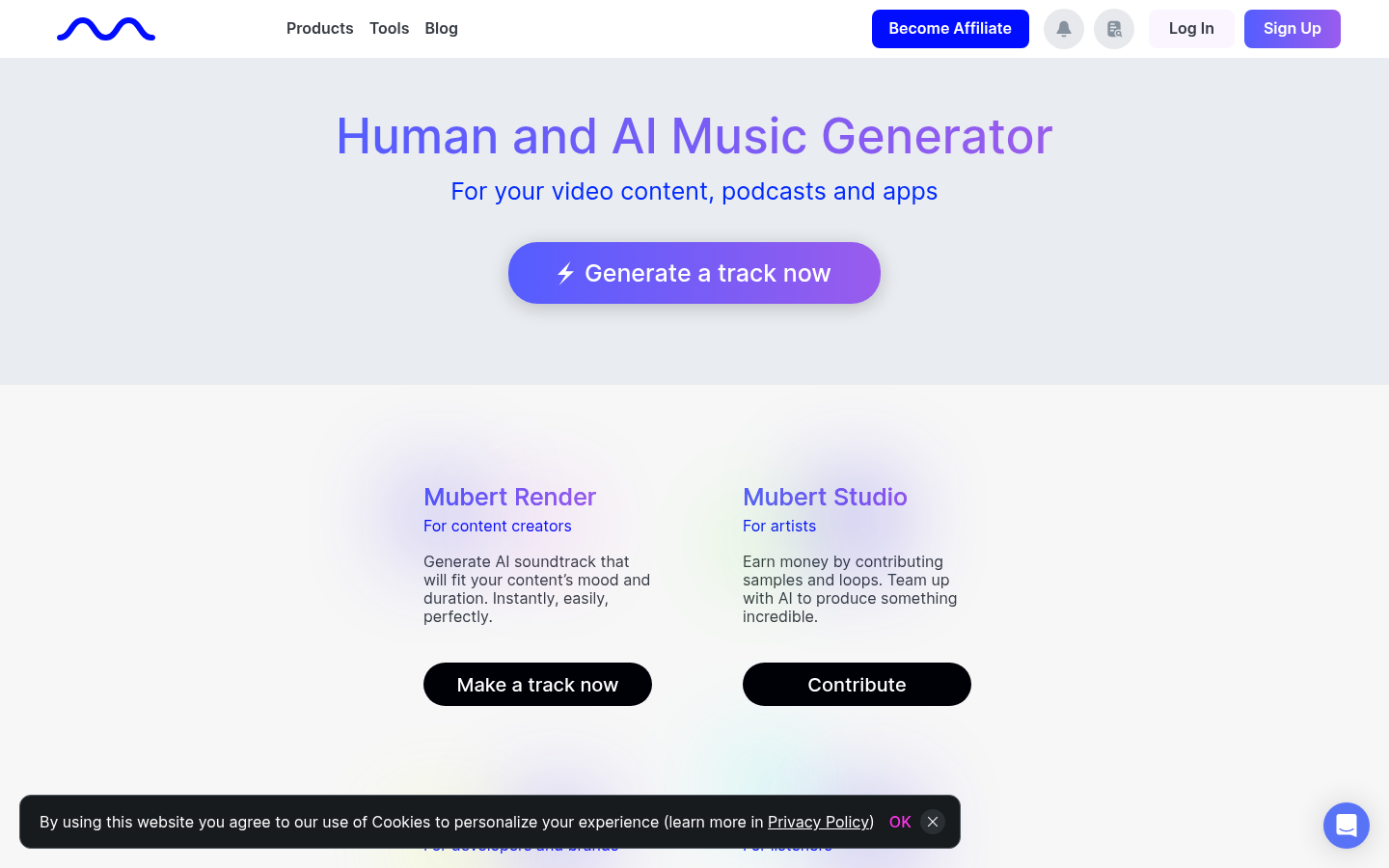
Mubert
- Trained only on licensed and partner content, so DMCA risk on Twitch or Kick is close to zero
- Sub-second WebRTC latency makes it the only tool here actually built for live playback
- 150-plus genres and moods cover ambient beds through techno without looping the same phrase
- No vocals or lyrics at all, so it cannot replace Suno for a sung track
- API tiers from $199 to $499 a month are priced for studios and platforms, not solo streamers
- The consumer Render app interface feels utilitarian next to Suno's polish
Best pick when the dominant use case is playing music live on stream without a takedown risk.
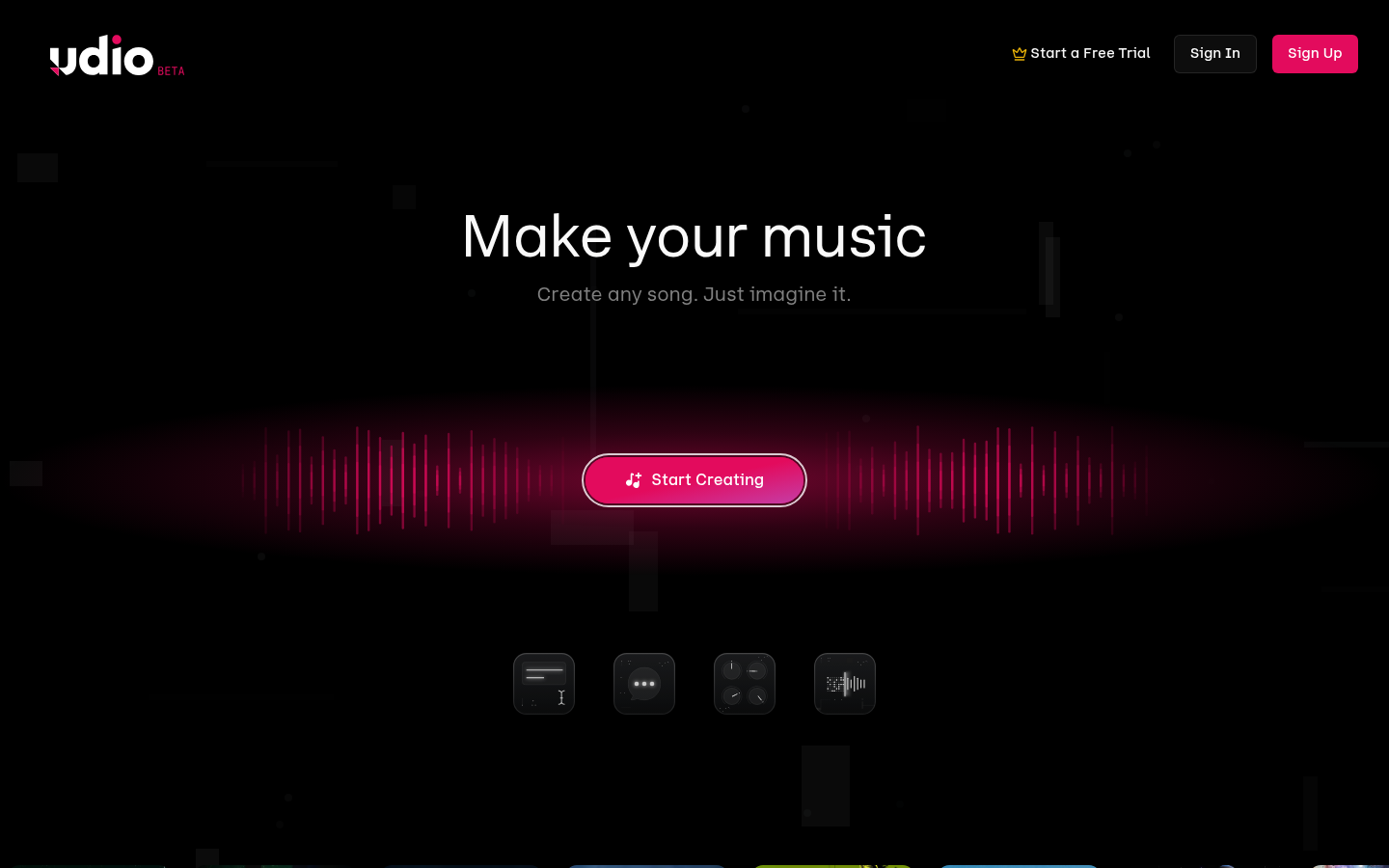
Udio
- 48kHz stereo output with the strongest instrumental separation and arrangement clarity we tested
- Inpainting regenerates one weak section, a bad bridge or a flat drop, without redoing the track
- Extends tracks to 10 minutes without the melodic drift shorter-context tools show
- Free tier gives only about 3 songs a day, thinner than Suno's 50 daily credits
- Vocals are technically accurate but carry a slightly processed sheen next to Suno's phrasing
- Steeper learning curve than a one-box prompt tool if you just want a quick track
The closest thing to a straight Suno swap when you want more control over the finished mix.

Soundraw
- Trained only on music its own producers recorded in-house, so every track ships with a clean license
- In-browser mixer lets you swap instruments and adjust section energy without opening a DAW
- Stem downloads are included, useful for building your own stream intro and outro kit
- Annual-only billing locks you in for a year, a recurring complaint in user reviews
- No vocals or lyrics at all, purely instrumental output
- Melodic and drum-fill patterns start repeating once you generate several tracks in one style
A solid instrumental safety net, though variety thins out fast once you lean on one genre.
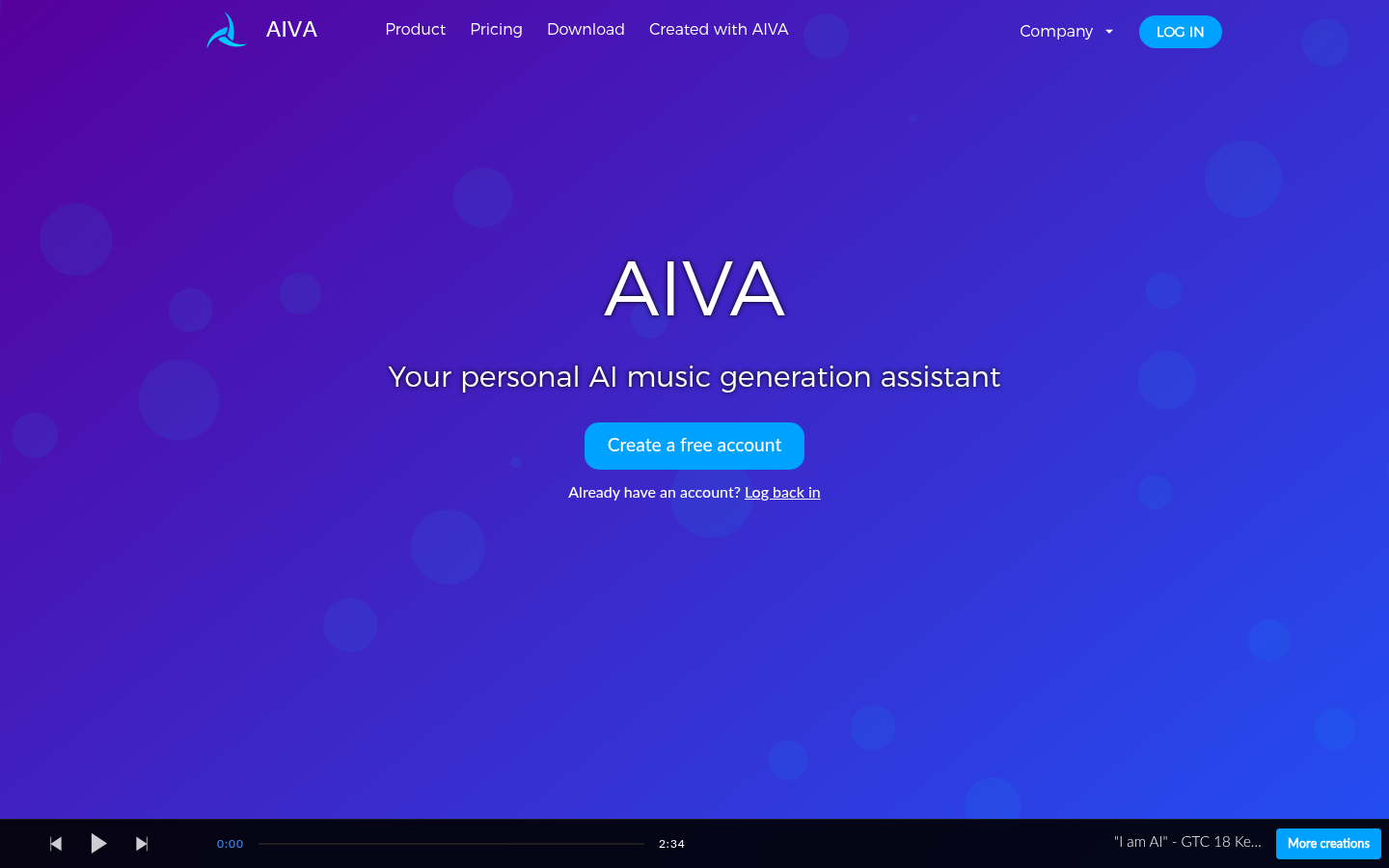
AIVA
- 250-plus orchestral and cinematic styles that most competitors do not attempt
- Piano-roll editor plus MIDI import and export give producers real compositional control
- First AI ever recognised as a composer by a music rights society, SACEM, back in 2016
- No vocal generation at all, a non-starter if you need a sung track
- Free plan is strictly non-commercial and keeps AIVA's copyright, unusable on a monetized stream
- Full copyright transfer only unlocks on the Pro tier at roughly 33 EUR a month billed annually
Overkill for a quick stream loop, but the right call for a cinematic channel intro or trailer cue.
Verdict
Mubert is the strongest Suno alternative for the dominant use case on this site: live playback on Twitch or Kick without DMCA risk. Udio is the closest straight swap if you need vocals with more editing control than Suno's one-box workflow. Soundraw and AIVA cover instrumental-only jobs, a clean-license background bed and cinematic scoring, that Suno was never built for.
How we tested
Every pricing figure, licensing claim, and feature listed here was checked against each vendor's current pricing page and public documentation in July 2026. Vocal and instrumental quality notes draw on published output samples and independent coverage (SoundGuys, Musci.io) rather than a single listening pass, cross-referenced against each vendor's own demo tracks. DMCA and commercial-licensing claims reflect each company's stated training-data policy and any public label settlement status. Suno's customer-sentiment note reflects its public Trustpilot score (roughly 1.5/5 on 650+ reviews) rather than our own opinion. No vendor on this page paid for placement, and none of these tools currently carry a synth.stream affiliate link.